No One Actually Taught You This With Clarity and Coherence: How to Apply or Build a Framework That Doesn't Feel Like a Sterile Academic Exercise
A 1-Day Workshop for Qualitative Researchers Ready to Build, Articulate, and Apply Frameworks with Clarity and Confidence — No More Fumbling Through Explanations, No More Forcing Theories That Don't Fit
"I don't know what counts as a framework." Theoretical? Conceptual? Lens? Perspective? Everyone uses different words and no one defines them clearly.
"I can't pick one." You've read the theories. None of them fit exactly. You're afraid to commit to the wrong one.
"I have one but I don't know how to use it." It's in your lit review. But how does it show up in your methods? Your analysis? Your findings?
"I can't explain it clearly." Your committee keeps asking for clarification. You've rewritten it three times. It still doesn't land.
"I want to build one that's actually mine." Not borrowed. Not forced. One that fits your study, your data, your questions.
This workshop teaches you how.
January 17, 2026 | 11am-5pm ET
Claim Your Spot
WORKSHOP DETAILS
When: January 17, 2026
- 11:00 AM - 5:00 PM Eastern Standard Time (Please adjust according to your timezone)
Where: Live on Zoom (link sent upon registration) Recordings and materials available for 60 days
Investment: $297
What's Included:
- 6 hours of live instruction
- Hands-on practice with your data (or a provided dataset)
- Personalized feedback
- Workshop materials and templates
- 60-day recording access
- BONUS: Follow-Up Q&A Session — February 19, 4-5pm ET via Zoom. Can't attend live? Submit questions via email and receive a recorded response. (Zoom link will be sent via email)
AFTER You Register: You'll receive Zoom links for the workshop and the follow-up Q&A session
WHY THIS WORKSHOP IS DIFFERENT
This Isn't Your Typical FORMULAIC matching of theoretical frameworks to topics and learning how to talk like a supposed academic.
This is where you will learn to honor your ways of knowing, thinking, being, feeling and find ways to bolster that using or building resonant frameworks and learning how to read and analyze using those frameworks. Clarity is confidence. Theory is your permission slip to do the work that you want to do.
Sound Familiar?
"I don't know the difference between a theoretical framework and a conceptual framework."
You've heard both terms thrown around. Sometimes interchangeably. Sometimes not. You've read definitions that contradict each other. You nod along in class or committee meetings but you're not actually sure what you're supposed to be building — or if what you have even counts.
"I have a theory I want to use, but I don't know how to apply it to my study."
You picked a framework because it felt right. Or because your advisor suggested it. Or because you saw it in other dissertations. But now you're stuck. How does it actually show up in your methods? Your analysis? Your findings? You can name it but you can't USE it.
"My committee keeps asking me to clarify my framework and I don't know what else to say."
You've explained it three different ways. You've rewritten the section twice. They're still not satisfied. You're starting to wonder if YOU even understand it — or if you just picked something and hoped it would work.
You've read the books. You've watched the YouTube videos. But no one showed you how to BUILD one.
You need someone to think alongside you — to guide you in constructing a framework that feels like an extension of who you are, not someone else's framing that you're forcing yourself into for technical fit.
You want something that resonates. Culturally rooted. Actually fits YOUR study, YOUR data, YOUR questions. Something that cuts deep and makes you feel alive in your work.
That's the power of a coherent framework — clarity, confidence, and what bell hooks called a liberatory practice.
That's where I come in.
Claim your spotWHAT YOU WILL ACTUALLY LEARN
- Understand the difference between theoretical frameworks, conceptual frameworks, and other framework types — and know which one YOUR study needs
- Learn how frameworks show up in different parts of your work — research questions, literature review, methods, analysis, discussion
- BUILD your own conceptual framework from your data, your literature, or a provided dataset
- Identify the key domains of your framework — the 3-6 tenets that anchor your study
- Articulate the relationships BETWEEN those domains — not just list them, but show how they connect
- Create a visual metaphor for your framework — something you can actually see and explain
- Learn how to READ your framework — what it tells you, what it highlights, what it leaves out
- APPLY your framework to analyze data or literature — not in theory, but in practice, with real text in front of you
- Walk away with a clear mapping of every framework in your study and how it applies to your work: ontoepistemology, substantive or conceptual, methodological, analytical, representation as needed
You'll work with your own data and/or literature — or if you're early in the process, I'll provide a dataset for you to practice with. Either way, you leave with an understanding of the frameworks relevant to your work, the ability to read data through your framework, and the skills to build a conceptual framework from literature or data.
Curriculum
Your 1-Day Transformation
JANUARY 17, 2026 is the day!
Morning Session (11:00am-12:30pm): Foundations
- What makes something a framework?
- Theoretical vs. conceptual vs. other framework types — what's the actual difference?
- How do frameworks show up in different parts of your dissertation or study?
- Common mistakes and misconceptions
- Getting clear on what YOUR study actually needs
12:30-1:00pm: Break
Afternoon Session 1 (1:00-1:20pm): Building Your Conceptual Framework
- How to create a conceptual framework from your data, literature, or a provided dataset
- Identifying key domains
- Articulating 3-6 tenets of your framework
- Mapping the relationships between them
Big Group Discussion (1:20-2:00pm): Hot Seat Feedback
- Share your framework-in-progress
- Get direct feedback from Dr. Bhattacharya
- Learn from watching others work through their stuck points
Visual Metaphor Creation (2:00-2:30pm)
- Create a visual representation of your framework
- Move from abstract concepts to something you can see and explain
- Individual support as you work
Big Group Discussion (2:30-3:00pm)
- Share your visual metaphors
- Peer feedback and refinement
3:00-3:15pm: Break
Read Data/Literature With Your Framework (3:15-3:45pm)
- Apply your chosen framework to read and analyze data or literature
- See how it works in practice, not just in theory
Big Group Discussion & Q&A (3:45-4:15pm)
- Share your insights
- Get direct feedback
- Troubleshoot remaining stuck points
Reflections & Insights (4:15-4:45pm)
- What shifted for you?
- What questions remain?
- What do you need to do next?
Wrap Up (4:45-5:00pm)
- Key nuggets
- What's next — looking forward
- Close the day grounded and clear
Who is This For?
This Workshop Is For You If...
- You want more clarity between the differences and similarities of a theoretical framework and a conceptual framework
- You've picked a theory but don't know how to apply it to your study
- Your committee keeps asking you to "clarify your framework" and you're not sure what else to say
- You want to BUILD a conceptual framework, but don't know where to start or how
- You have data or literature and need a framework to help you make sense of it
- You're early in your process and want to understand frameworks before you need one
- You want to articulate your framework with confidence — to committees, reviewers, and yourself
- You're tired of vague explanations that don't actually show you HOW
- You need someone as a thought partner to offer you tangible pathways and point out what you're doing well and where you might need to reconfigure
This Workshop Is Not For You If...
- You want a formula framework match for your topic based on what others have chosen for a similar topic and focus
- You find frameworks are a sterile obligation and have no interest in pursuing any further possibilities
- You want someone to hand you a framework without you doing the thinking
- You do not think frameworks play that much of a key role in your work
- You feel confident in your framework knowledge and have no need for professional development in this area
- You already have a framework chosen that feels aligned with your work and have no need to explore further
- You don't work well in groups, but would rather work 1:1 with a mentor (if this is you, email Dr. Bhattacharya at [email protected])
- You want a recipe that bypasses your own intellectual engagement
- You find it difficult to be mentored because you're attached to how you already do things
Give 'Em Something to Talk About: Testimonials
Dr. Dina Maramba
Full Professor, Claremont Graduate University
Dr. Rhemma Payne
Assistant Professor, Western Kentucky University
Dr. Kiersten Greene
Associate Professor and Director, Childhood Education, Hunter College, CUNY
Meet Your Instructor
Dr. Kakali Bhattacharya
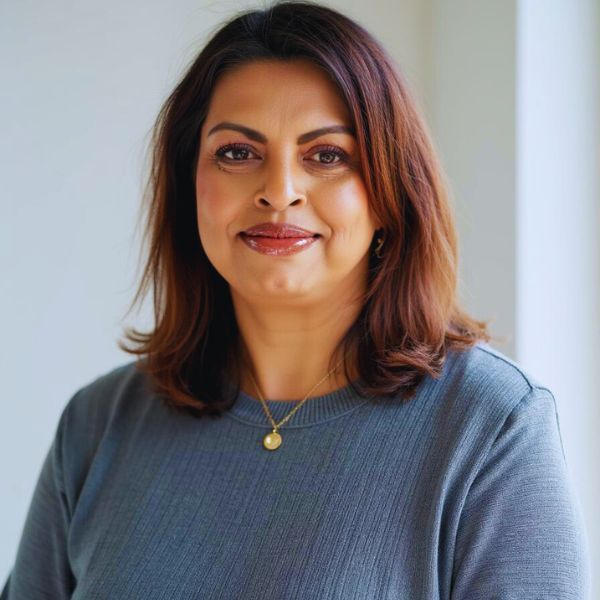
I'm Dr. Kakali Bhattacharya
I bring 20+ years of teaching qualitative research with criticality, ethics, trauma-informed practice, and cultural rootedness. I've mentored hundreds of researchers — students, faculty, independent scholars — and I've noticed the same pattern again and again: people don't understand theory. Or they're afraid of it. Or they feel a distance between who they are and the theories they're supposed to be using.
And that makes sense. Popularized theories are not applicable to everyone or every topic. A theoretical framework isn't something you just pick off a shelf — it requires integration with your positionality, your worldview, your epistemology, your ontology. These are things that may not have been present in people's academic journey prior to my mentoring. I teach you how theory is an extension of you and you never have to stifle your voice, your beingness and all the ways that you are you to choose a theoretical framework based on pre-determined expectations or formulaic selection.
When that integration happens, theory becomes what bell hooks called a liberatory practice. I cannot tell you how many times my mentees and I have used theory to argue and justify our work, move it through reviewers and naysayers, get it published, and have it read by like-minded people who feel seen by it.
Why Learn Theoretical Framework From Me
I teach you to stop borrowing frameworks that don't fit and start building ones that do. I show you how to integrate theory with who you actually are — your positionality, your ways of knowing, your cultural rootedness — so that your framework becomes an extension of you, not a sterile academic exercise you're forcing yourself into.
You'll learn to articulate your framework with confidence, defend it to committees and reviewers, and use it as an analytical tool that actually helps you see your data differently. Not because you followed a formula, but because you understand why you made the choices you made.
I've published 100+ works, trained thousands of researchers, and written the book that many graduate programs use to teach qualitative methods.
I don't do vague. But I also don't throw you into the deep end. Framework confusion is real. I meet you where you are and help you build something that's yours.
Frequently Asked Questions
You have questions? We have answers. Check out the questions below and if you're still sitting with more questions, do not suffer. Email Dr. Bhattacharya at [email protected]
What if I don't have a framework yet?
What if I already have a theoretical framework but don't know how to use it?
What's the difference between a theoretical framework and a conceptual framework?
What if I don't have data yet?
What if I can't attend live?
What if I'm using a framework my advisor suggested but I don't fully understand it?
Will this work for my methodology?
What's the follow-up Q&A session?
What kind of materials should I bring?
Enroll Now to Claim Your Spot. We start live session on January 17, 2026.
Understanding and Building Theoretical and Conceptual Frameworks — and Applying Them to Data
Your Investment
$297
This amount will be credited towards our S2S Mentoring Program if you choose to apply and get accepted. S2S Mentees receive all workshops for free.
Have you scrolled all the way to here?
We admire your need to know everything. No shade, just recognizing how we are so alike.
Ready to Stop Fumbling Through Framework Conversations?
There are very few places where mentoring is focused on the shape of you and not the shape of force fitting yourself or a sliver of yourself into academic formats and expectations.
- You can keep nodding along when people ask about your framework while secretly hoping they don't ask follow-up questions
- You can keep borrowing theories that don't quite fit and hoping no one notices
- You can keep rewriting your framework section hoping this version finally makes sense
- Or you can spend one day actually learning how to build, articulate, and apply a framework — with real feedback and a clear process
January 17, 2026. One day. Tangible, actionable progress.
