No One Actually Taught You the Craft: How to Write Narratives That Move People — Not Just Report What Happened
A 1-Day Workshop to Anchor Your Narrative Voice Without Playing Small — No More Guessing How to Make Personal Narratives Scholarly and Defensible. Learn the Craft of "Show Don't Tell" and Walk Away with Skills That Unfold in Any Narrative Research.
"I don't know how to write scenes." You know what happened. You have the data. But when you try to write it, it comes out flat. A summary. A report. Not a story.
"My writing is sterile." Short sentences. Academic tone. It reads like you don't have more to say — but you do. You just don't know how to get it on the page.
"I over-rely on quotes." A brief sentence introduces the interviewee... followed by a very long quote. Then another. You have SO MUCH data and don't know what to do with it.
"I can't find my voice." You were trained to disappear. To disconnect yourself from the research. Now you want to write narratively but you don't know how to bring yourself in.
"I want my writing to move people — but it doesn't." You want readers to feel something. You want your writing to honor the lives it represents. But it falls flat every time.
This workshop teaches you the craft.
February 7, 2026 | 11am-5pm ET
Claim Your Spot
WORKSHOP DETAILS
When: February 7, 2026
- 11:00 AM - 5:00 PM Eastern Standard Time (Please adjust according to your timezone)
Where: Live on Zoom (link sent upon registration) Recordings and materials available for 60 days
Investment: $297
What's Included:
- 6 hours of live instruction
- Hands-on practice with your data (or a provided dataset)
- Personalized feedback
- Workshop materials and templates
- 60-day recording access
- BONUS: Follow-Up Q&A Session — March 5, 4-5pm ET via Zoom. Can't attend live? Submit questions via email and receive a recorded response. (Zoom link will be sent via email)
AFTER You Register: You'll receive Zoom links for the workshop and the follow-up Q&A session
WHY THIS WORKSHOP IS DIFFERENT
This is not a regurgitation of standard narrative writing elements. It is a deeply responsive, embodied way of knowing, meeting, and creating narratives, where writing itself generates possibility and expansion in your work.
This is where you learn to honor your ways of knowing, thinking, being, and feeling, and to strengthen them through narrative writing in any form: autoethnography, duoethnography, personal narratives, thematic narratives, participant descriptions, and more. Clarity is confidence. Narrative writing is your permission slip to do the work you want to do.
Sound Familiar?
"I don't know the difference between autoethnography and personal narrative."
You've heard both terms. You've seen them used interchangeably — and differently. You're not sure which one fits your work, or if it even matters. You call it autoethnography because that sounds more academic, but you've never actually learned the method.
"I don't know how to show instead of tell."
Everyone says it. No one teaches it. You know your writing is too summary-heavy but you don't know how to fix it. What does "showing" actually look like in qualitative research?
"I can't integrate my voice with participant data."
You either disappear behind their quotes or you take over the whole thing. You don't know how to layer your voice WITH the data without overtaking it — or getting lost.
"I don't know where to start or end my story."
Providing the right amount of context without starting from the beginning of time. Knowing when to enter the story. Knowing when to stop. You're stuck.
You've been trained to write like a robot. No one taught you the craft of narrative writing.
You need someone to show you how scenes work. How dialogue functions. How pacing creates tension. How voice emerges. How thick description puts readers inside the moment.
These are craft skills. They can be taught. They can be practiced. They can transform your writing.
That's where I come in.
Claim your spotWHAT YOU WILL ACTUALLY LEARN
- Scene creation — how to write a scene vs. just reporting what happened
- Dialogue — how to use dialogue effectively in narrative research
- Voice differentiation — the difference between academic voice and narrative voice, and how to move between them
- Storytelling structures — where to enter, where to exit, how to arc
- Thick description — vivid, sensory, evocative language that puts readers in the moment
- Showing vs. telling — the craft distinction everyone names but no one teaches
- Integrating quotes — when to use participant words vs. paraphrase vs. narrate
- Pacing — when to slow down, when to speed up
- Layering self with data — how to bring your voice in without overtaking participants
- Method clarity — understanding the differences between autoethnography, duoethnography, and personal narrative
-
You'll leave this workshop with new pages of your own narrative writing — and the craft knowledge to keep going.
Curriculum
Your 1-Day Transformation
February 7, 2026 is the day!
Introductions & Orientation (11:00-11:15am)
- Get settled
- Meet your fellow writers
- Set intentions for the day
Foundations (11:15am-12:15pm)
- Scene creation — what makes a scene
- Dialogue — how it functions in narrative research
- Voice differentiation — academic vs. narrative voice
- Storytelling structures — where to enter, how to arc
- Elements of thick description — sensory, vivid, evocative language
12:15-12:45pm: Break
Article Analysis (12:45-1:15pm)
- Analyze a personal narrative article vs. an autoethnography article
- Identify craft elements in published work
- Notice what moves you — and why
Big Group Discussion (1:15-2:00pm)
- Share your observations
- Discuss the differences between methods
- Surface the craft elements you noticed
2:00-2:15pm: Break
Writing Session (2:15-3:15pm)
- Write your own narrative
- Apply what you learned
- Work with your own data or experiences
Spotlight Mentoring (3:15-3:45pm)
- Live feedback on participant writing
- Watch others receive feedback and learn from it
- See the craft in action
Paragraph Pair Share & Peer Reflections (3:45-4:15pm)
- Share your writing with a partner
- Give and receive peer feedback
- Practice naming craft elements
Big Group Share & Reflections (4:15-4:45pm)
- Volunteers share their writing
- Group discussion of what's working
- Final insights and observations
Wrap Up (4:45-5:00pm)
- Key nuggets from the day
- What's next — looking forward
- Close the day grounded and clear
BEFORE THE WORKSHOP
After registration, you'll receive a link to four articles by Dr. Bhattacharya — examples of autoethnography and personal narrative that demonstrate the craft elements we will explore together.
Please read all four before the workshop.
As you read, notice:
- How scenes are constructed
- Where dialogue appears and how it functions
- How the author moves between time periods
- What makes certain moments vivid
- Where you feel something — and why
You do not need to analyze formally. Just read, notice, feel.
Who is This For?
This Workshop Is For You If...
- You're writing autoethnography, duoethnography, or personal narratives
- You want to move beyond thematic reporting to narrative writing
- You have data or experiences to share and want to write narratives that actually move people
- You've been told to "show, don't tell" but no one taught you how
- You over-rely on participant quotes and want to learn how to integrate your voice
- You don't know where to start or end your story
- You want your writing to honor the lives it represents
- You're tired of your work feeling flat and want to learn the craft
- You want method clarity — understanding autoethnography vs. duoethnography vs. personal narrative
This Workshop Is Not For You If...
- You want a recipe or a formula with step by step instructions that you think will help guide your narrative writing
- You want to outsource your intellectual engagement by using AI or other third party tool for writing and bypass your analytic thinking and the richness of your voice
- You do not want to write during the workshop
- You aren't interested in narrative forms of qualitative research
- You want someone to fix your writing for you rather than teach you the craft
- You don't work well in groups, but would rather work 1:1 with a mentor (if this is you, email Dr. Bhattacharya at [email protected])
- You find it difficult to be mentored because you're attached to how you already do things
Give 'Em Something to Talk About: Testimonials
Dr. Dina Maramba
Full Professor, Claremont Graduate University
Dr. Rhemma Payne
Assistant Professor, Western Kentucky University
Dr. Kiersten Greene
Associate Professor and Director, Childhood Education, Hunter College, CUNY
Meet Your Instructor
Dr. Kakali Bhattacharya
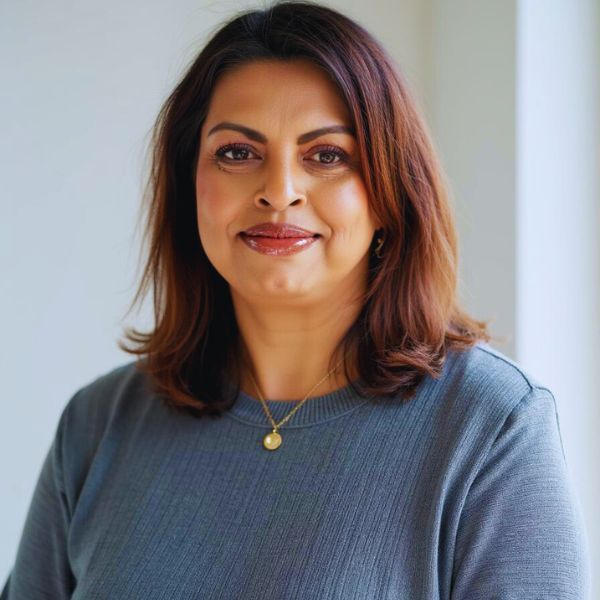
I'm Dr. Kakali Bhattacharya
I bring 20+ years of teaching qualitative research — and I've been writing and publishing narrative work for most of that time. I've written about the messy complexity of transnational existence, international graduate student experiences, hidden curriculum in higher education, and the migratory nature of human lives. My work spans autoethnography, arts-based research, visual narratives, critical nonfiction, creative nonfiction, creative social fiction, and multiple other formats. This work has been published in leading qualitative journals and cited by researchers around the world.
But here's what matters for you: I came to qualitative research from a heavy scientific and post-positivist background. My undergraduate years were spent in biochemistry and psychology. My early graduate work was in instructional design and technology. When I met qualitative research, I had no skills for writing rich, thick, descriptive narratives — science and social science had not prepared me for that. It took me a long time to understand the craft of writing in rich narrative ways.
And yes, there are courses you can take and books you can read — all of that is valuable. But what is even better is testing your ideas with people in community who will support you and not tear you down. That is why I created this workshop. I wish someone had taught me what I'm teaching here. Not because you'll leave knowing everything about narrative writing — but because you'll leave with momentum. The kind of momentum you're excited to carry forward and deepen after the workshop ends.
That's what I wish someone had done for me: pointed me in the right direction, gave me enough skills and background, allowed me to practice and assess where I was, offered friendly feedback, and helped me build momentum for writing what I deemed important in my research.
That's what I'm doing here.
Why Learn Narrative Writing From me?
- I teach responsive craft, not formula. I do not teach standard narrative writing elements that force you into a template. I teach a responsive craft — one that responds to your situatedness so that when you pick up these skills, you amplify the work you're already doing rather than force-fitting into someone else's formula.
- I understand the transition. I know what it's like to come from a background that did not prepare you for narrative writing and land in work that absolutely requires it. I meet you exactly where you're at and help you find your own narrative voice — not expect you to sound like someone else or like a typical academic.
- I believe in tangible, hands-on learning. I don't just tell you what narrative elements are — I teach you to analyze narrative elements in other writing so you can decide what you converge with and what you diverge from in your own work.
- I don't teach and leave you to sink or swim. During the workshop, you have dedicated time to write, get peer feedback, and discuss your thoughts in big group discussion. You also get a follow-up session a month later — after you've applied these concepts to your own work — so you're still supported as you grow.
- My goal is not to make you sound like anybody else. My goal is to make you sound more like you — so you can take up more space and write in the full voltage of your own power.
Frequently Asked Questions
You have questions? We have answers. Check out the questions below and if you're still sitting with more questions, do not suffer. Email Dr. Bhattacharya at [email protected]
What if I've never written a narrative before?
What if I already have a narrative draft but it's not working?
What's the difference between autoethnography and personal narrative?
What if I don't have data yet?
What if I can't attend live?
Do I need to read the articles before the workshop?
Will this work for my methodology?
What's the follow-up Q&A session?
What kind of materials should I bring?
Enroll Now to Claim Your Spot. We start live session on February 7, 2026.
The Art and Craft of Narrative Writing: For Autoethnography, Duoethnography, and Personal Narratives
Your Investment
$297
This amount will be credited towards our S2S Mentoring Program if you choose to apply and get accepted. S2S Mentees receive all workshops for free.
Have you scrolled all the way to here?
I admire your need to know everything. No shade, just recognizing how we are so alike.
Ready to Stop Writing Flattened, Sterile Narratives?
There are very few places where mentoring is focused on the shape of you and not the shape of force fitting yourself or a sliver of yourself into academic formats and expectations.
- You can keep sterile reports of what happened without making anyone feel anything
- You can keep over-relying on quotes because you don't know what else to do with your data
- You can keep hearing "show, don't tell" without anyone actually teaching you how the anatomy of the craft so you can alchemize with your sensibilities and beingness
- Or you can spend one day learning the craft — scene, dialogue, voice, pacing, structure — with real feedback and real practice
-
February 7, 2026. One day. Narratives that actually move people. Maya Angelou reminded us that people remember how you make them feel. What if your writing could make people feel and shift something real? It can. You are that powerful. Don’t doubt it. And if you join the workshop, you won’t be alone. You’ll be in a community that keeps reminding you of exactly this.
